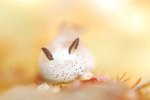
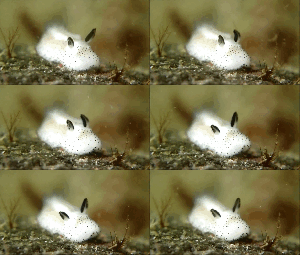
Sea slugs aren’t exactly creatures you’d consider to be adorable, but Japan’s Twittersphere has just rediscovered what is probably the cutest sea slug ever – Jorunna parva, a sea slug that looks like a fluffy bunny.
This tiny sea slug’s bunny ears are actually rhinophores, or chemosensory scent/taste organs that help them detect chemicals in the water and make their way across the ocean floor. They can be found from the Indian Ocean to the Philippines to Japan, where photos of them have become popular.
Scientist Karl Berg has constructed a bunch of parrot nests on a Venezuelan ranch, and he’s got mini-cams in those nests recording everything these little birds do. As you’ll hear, they peep a lot.
“Most people say, ‘Well, all those calls are just noise,’ ” Karl said, but “I think they’re having conversations.” Berg has listened to so many parrots in so many nests for so long, he has been able to identify that weeks after birth, these little birds begin to use very specific peeps to identify themselves to others. Not only that, they learn the peeping “names” of their parents, brothers, sisters, and use them in conversation, as in, “Peep-duh-dee-Peep, is that you?”
Senegal, Mauritania, Mali, Burkina Faso, Niger, Nigeria, Chad, Sudan, Eritrea, Ethiopia, and Djibouti. Those are the countries. It will be drought-resistant species, mostly acacias. And this is a brilliant idea you have no idea oh my Christ
This will create so many jobs and regenerate so many communities and aaaaaahhhhhhh
it’s already happening, and already having positive effects. this is wonderful, why have i not heard of this before? i’m so happy!
Oh yes, acacia trees.
They fix nitrogen and improve soil quality.
And, to make things fun, the species they’re using practices “reverse leaf phenology.” The trees go dormant in the rainy season and then grow their leaves again in the dry season. This means you can plant crops under the trees, in that nitrogen-rich soil, and the trees don’t compete for light because they don’t have any leaves on.
And then in the dry season, you harvest the leaves and feed them to your cows.
Crops grown under acacia trees have better yield than those grown without them. Considerably better.
So, this isn’t just about stopping the advancement of the Sahara – it’s also about improving food security for the entire sub-Saharan belt and possibly reclaiming some of the desert as productive land.
Of course, before the “green revolution,” the farmers knew to plant acacia trees – it’s a traditional practice that they were convinced to abandon in favor of “more reliable” artificial fertilizers (that caused soil degradation, soil erosion, etc).
This is why you listen to the people who, you know, have lived with and on land for centuries.
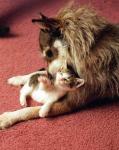
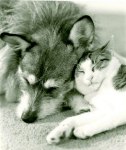
Cats release these pheromones from glands in their cheeks, chin, and their paw pads(known as feline facial pheromones). What your cat intends to communicate will determine which gland your kitty uses to “mark” with. These pheromones are a strong form of communication in the feline world, and are considered to be used mostly for territorial marking.
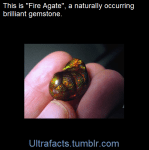
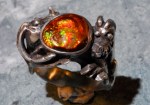
They are found only in certain areas of northern Mexico and the southwestern United States. Approximately 24-36 million years ago these areas were subjected to massive volcanic activity during the Tertiary Period. The fire agates were formed during this period of volcanism when hot water, saturated with silica and iron oxide, repeatedly filled cracks and bubbles in the surrounding rock.
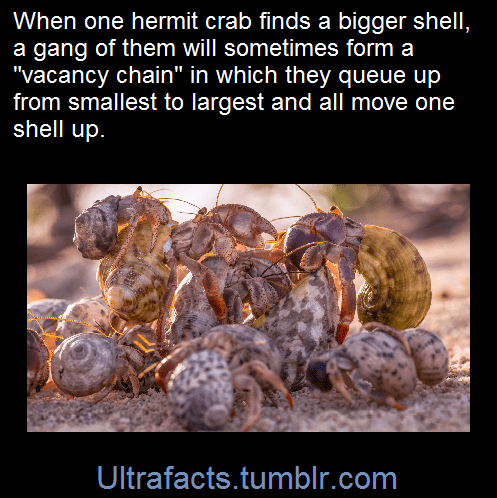
When an individual crab finds a new empty shell it will leave its own shell and inspect the vacant shell for size. If the shell is found to be too large, the crab goes back to its own shell and then waits by the vacant shell for anything up to 8 hours. As new crabs arrive they also inspect the shell and, if it is too big, wait with the others, forming a group of up to 20 individuals, holding onto each other in a line from the largest to the smallest crab. As soon as a crab arrives that is the right size for the vacant shell and claims it, leaving its old shell vacant, then all the crabs in the queue swiftly exchange shells in sequence, each one moving up to the next size.
Here is footage from the BBC of this happening: [x]











 theluminouscosmos